Best Seller Icon Bestseller

Diploma IN Electronics(M-E-7569)

  • Last updated Feb, 2026
  • Certified Course

Course Includes

  • Duration1 Years
  • Enrolled0
  • Lectures300
  • Videos0
  • Notes0
  • CertificateYes

What you'll learn

The Electronics course is a one-year skill-based program designed to provide students with fundamental and practical knowledge of electronic components, circuits, and devices used in modern electrical and electronic systems. This course focuses on developing hands-on skills in assembling, testing, troubleshooting, and repairing electronic equipment used in industries, homes, and service centers.

Students will learn about basic electronics concepts such as current, voltage, resistance, electronic components (resistors, capacitors, diodes, transistors), circuit design, soldering techniques, and the use of electronic measuring instruments like multimeters and oscilloscopes. The course also covers digital electronics, power supplies, PCB (Printed Circuit Board) basics, and basic microcontroller concepts.

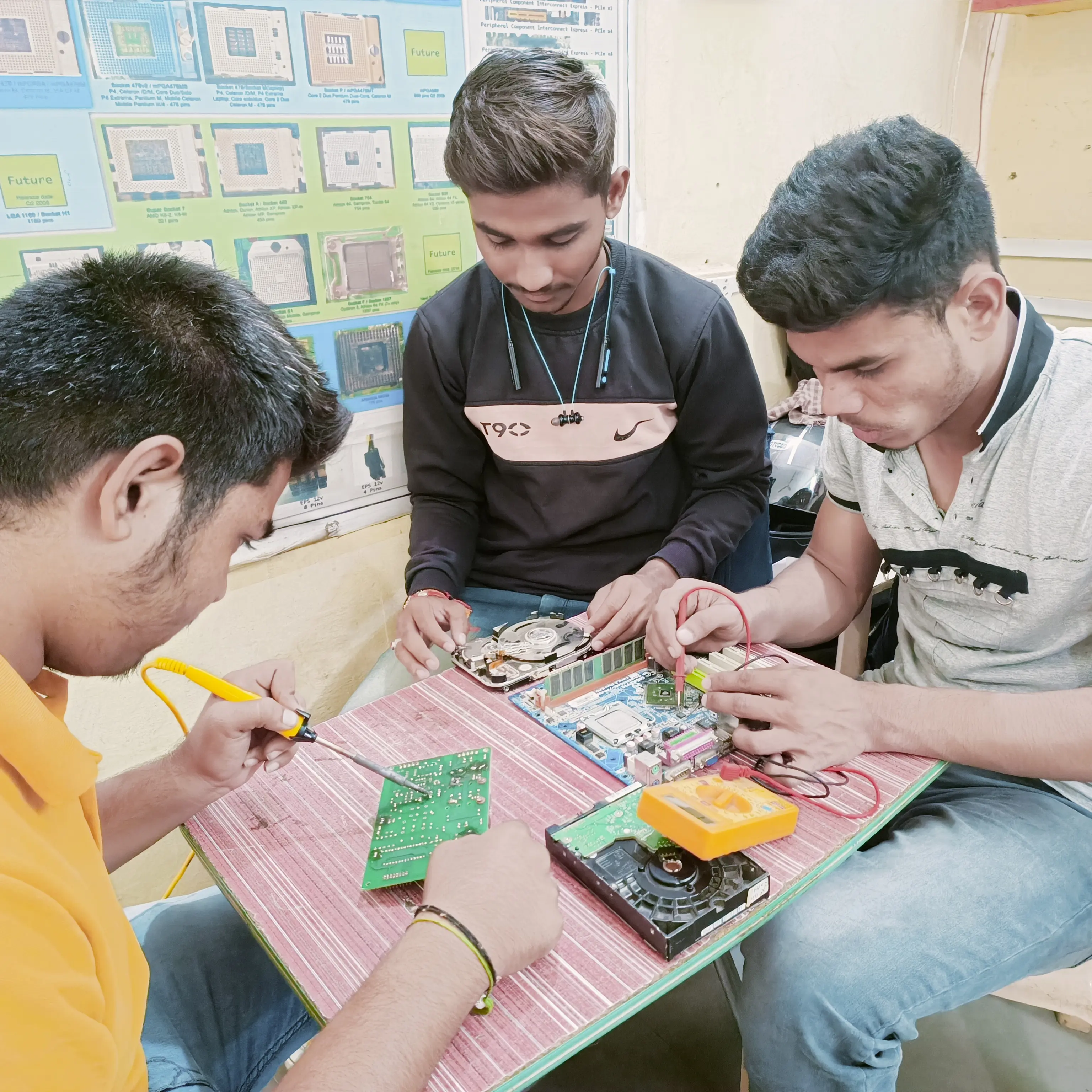
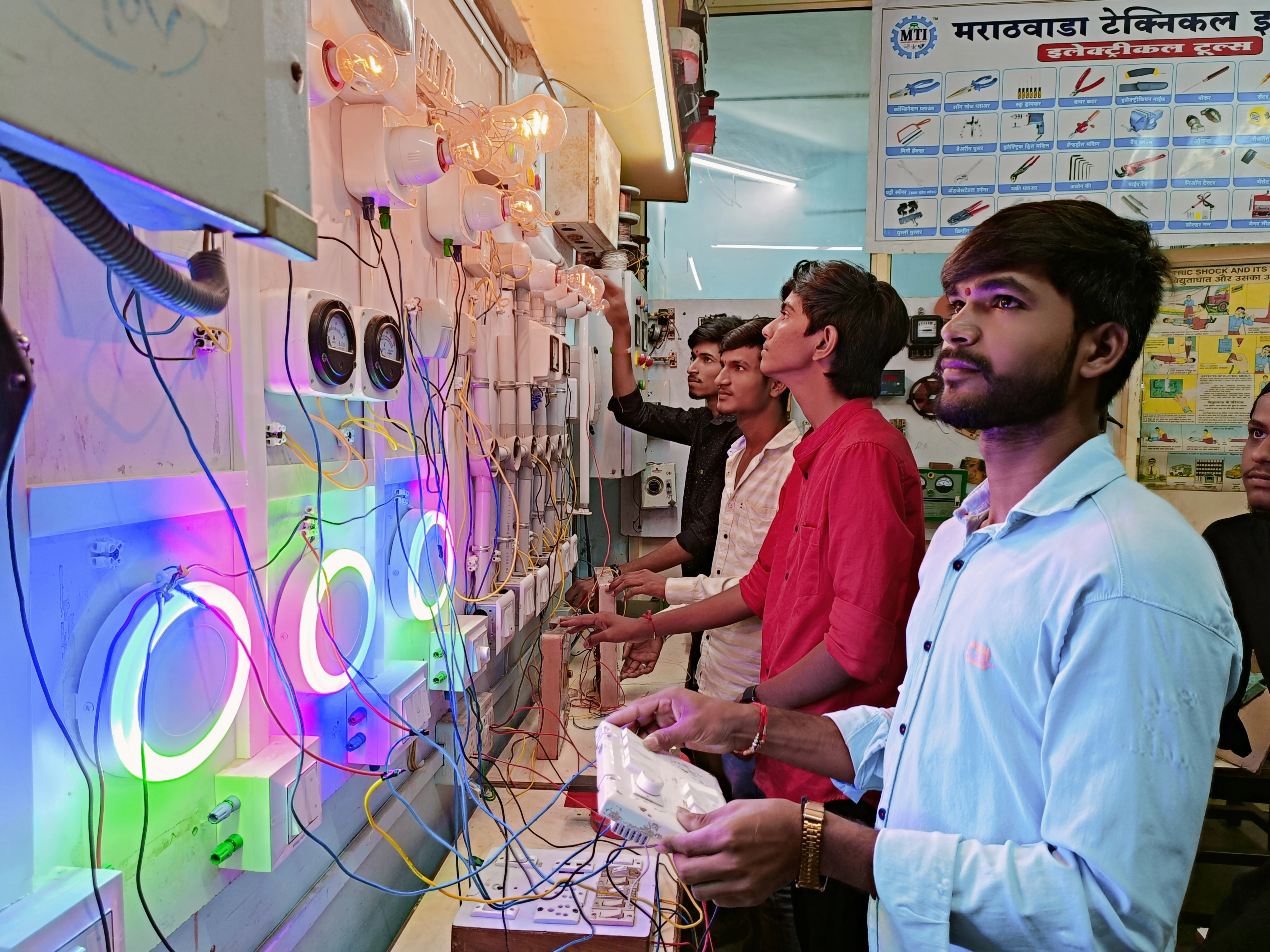
Through practical training and workshop sessions, students gain experience in assembling electronic circuits, identifying faults, and repairing devices such as power supplies, LED systems, and consumer electronics. Safety practices, basic computer skills, and industry-oriented training are also included to prepare students for real-world job environments.

After completing this course, students can work as Electronics Technician, Service Technician, PCB Technician, Maintenance Technician, or pursue further studies in advanced electronics and related fields. This course provides strong career opportunities in electronics manufacturing companies, service centers, automation industries, and electrical maintenance sectors.

Show More

Course Syllabus

Electronics 1 Year Course Syllabus

Duration: 1 Year (12 Months)

Total Modules: 10

Theory + Practical + Project

Module 1: Basic Electrical and Electronics Fundamentals

Theory:

  • Basic electrical quantities: Voltage, Current, Resistance, Power
  • Ohm’s Law and Kirchhoff’s Laws
  • AC and DC fundamentals
  • Series and Parallel circuits
  • Electrical safety rules

Practical:

  • Measurement of voltage and current using multimeter
  • Series and parallel circuit connections
  • Identification of basic components

Module 2: Electronic Components and Identification

Theory:

  • Resistors (types, color coding)
  • Capacitors (types and applications)
  • Inductors and transformers
  • Diodes (Rectifier, Zener, LED)
  • Transistors (NPN, PNP)
  • Switches, relays, connectors

Practical:

  • Component identification
  • Testing components using multimeter
  • LED connection and testing

Module 3: Tools and Measuring Instruments

Theory:

  • Multimeter (Analog and Digital)
  • Oscilloscope basics
  • Function generator basics
  • Power supply

Practical:

  • Using digital multimeter
  • Measuring voltage, current, resistance
  • Testing continuity and components

Module 4: Analog Electronics

Theory:

  • Diode circuits (Rectifier: Half and Full wave)
  • Filters and power supply
  • Transistor as switch and amplifier
  • Amplifier basics

Practical:

  • Rectifier circuit assembly
  • Transistor switching circuit
  • Power supply circuit

Module 5: Digital Electronics

Theory:

  • Number systems (Binary, Decimal, Hexadecimal)
  • Logic gates (AND, OR, NOT, NAND, NOR, XOR)
  • Truth tables
  • Basic digital circuits

Practical:

  • Logic gate circuits on breadboard
  • Digital IC identification
  • Truth table verification

Module 6: Soldering and PCB Technology

Theory:

  • Soldering tools and materials
  • Soldering and desoldering techniques
  • PCB types and layout basics

Practical:

  • Soldering practice
  • PCB assembling
  • Component mounting and testing

Module 7: Power Supply and Inverter Basics

Theory:

  • Linear power supply
  • SMPS basics
  • Battery and charging circuits
  • Inverter basics

Practical:

  • Power supply testing
  • Battery voltage measurement
  • SMPS identification

Module 8: Consumer Electronics Repair Basics

Theory:

  • LED TV basic blocks
  • Mobile charger basics
  • Home appliance electronics

Practical:

  • Charger testing and repair basics
  • LED circuit testing
  • Fault finding practice

Module 9: Basic Microcontroller and Automation (Introduction)

Theory:

  • Introduction to microcontroller
  • Applications in electronics
  • Automation basics

Practical:

  • Simple microcontroller demonstration
  • Basic input-output concepts

Module 10: Project Work and Industrial Training

Practical Project Examples:

  • LED flasher circuit
  • Power supply circuit
  • LED emergency light
  • Mini electronic project


Review

0.0
Course Rating (0 reviews)
0%
0%
0%
0%
0%


Call
Text Message
Review
Brochure
Email
CHAT